Learn how Support at Home budgets, pricing and contributions work under Australia’s new aged care system. Discover how home care funding helps you live well at home with Five Good Friends.
If you’re looking for clear guidance on Support at Home funding levels, quarterly budgets, service pricing, and what you’ll actually pay based on your circumstances, you’re in the right place.
The Support at Home program has transformed how in-home aged care is funded and managed in Australia. It’s designed to make your care more transparent, flexible, and easier to plan, so you can get the most from your funding and continue living well at home with confidence.
Whether you're new to government-funded aged care or transitioned from a Home Care Package, this guide helps you understand your funding, plan your care, and get the most value from the Support at Home program. And remember, you don't have to navigate this alone. We're here to help you every step of the way.
Five Good Friends offers service prices below the national average and provides expert guidance to help you get the most from your funding so you can live well at home.
The 8 Support at Home funding classifications
Support at Home has eight funding classifications, each with a specific quarterly budget based on your assessed care needs.
How is your classification determined?
Your classification is determined through a government assessment that looks at your care needs, daily routines, and what matters to you. The assessment is arranged through My Aged Care. The assessor will visit your home for a conversation about how you're managing and what support would help you live well at home.
How did Home Care Packages map across to the new classifications?
If you were previously on a Home Care Package, your former level broadly maps across to the new classifications. Levels 1 and 2 align with the lower classifications, while levels 3 and 4 sit toward the middle and upper range.
Current funding amounts (as of 1 July 2026)
Amounts are indexed annually in July. Verify current figures at myagedcare.gov.au.
How do the quarterly budgets work?
Budgets are released at the start of each quarter in July, October, January, and April. If you join mid-quarter, your first budget is calculated from your start date to the end of that quarter.
This quarterly structure helps you plan care proactively, track spending regularly, and adjust services as needs change throughout the year.
What happens to unspent funds?
If you don’t use all your allocated funds in a quarter, you can carry over a small amount into the next. The maximum amount you can carry over is the greater of $1,000 or 10% of your quarterly budget.
Services Australia will calculate your rollover amount either 61 days after the quarter ends or the day after your provider sends in their final claim for the quarter, whichever comes first.
Any remaining unspent funds beyond that do not accumulate. The structure encourages you to use your funding proactively to support your wellbeing now, while allowing flexibility for unforeseen needs.
How do Support at Home contributions work?
Under Support at Home, you only contribute toward the services you receive. This replaces the old income-tested care fee from the Home Care Package program.
Your Support at Home contribution depends on two key factors:
1. The type of service
Support at Home services fall into three categories, each with different contribution rules:
Clinical support services – fully government funded
You pay $0 for clinical support services, regardless of income and assets. Services include:
- Nursing care, wound management, medication management
- Allied health (physiotherapy, occupational therapy, podiatry, speech pathology, dietetics)
- Personal care assistance
Independence services – require a low to moderate contribution
Services include:
- Transport to appointments and activities
- Social support and community engagement
- Assistive technology
- Respite care
Important update: From 1 October 2026, the Australian Government will fully fund personal care services. This means participants approved for the personal care assistance in their support plan can access personal care at no out-of-pocket cost.
Everyday living services – incur a higher contribution
Services include:
- Domestic assistance (cleaning, laundry)
- Meal preparation
- Garden maintenance
- Home maintenance and repairs
2. Your financial situation
Your contribution rate is determined by Services Australia based on your income, assets and pension status.
Self-funded retirees with a Commonwealth Seniors Health Card pay lower rates than those without.
Want to know your contribution?
To help with planning, the Government offers a Support at Home contributions calculator so you can see what you might pay, based on your situation.
Following are three real-world examples to help you understand what this means in practice.
Example 1: Ron — Full age pensioner
Ron is 78 and lives independently near his local bowls club. After some health setbacks, everyday tasks became harder, so he applied through My Aged Care and was approved for Support at Home. His plan includes nursing visits, help with cleaning and shopping, and transport to appointments.
As a full age pensioner, Ron sits in the lowest contribution tier:
- Clinical supports (nursing and personal care): fully government-funded
- Independence supports (transport): Ron contributes 5%
- Everyday Living supports (cleaning, meals): Ron contributes 17.5%
His contributions are applied automatically. Each month, he receives a clear statement showing what has been spent, which services he has used, and what he has contributed. Ron knows exactly where he stands.
Example 2: Judith — Part pensioner
Judith is 83 and lives in the family home she has owned for decades. She receives a part Age Pension alongside some superannuation income. Her Support at Home plan includes physiotherapy, cleaning support and transport for medical visits.
As a part-pensioner, Judith sits in the moderate contribution tier:
- Clinical supports (physiotherapy): fully government-funded
- Independence supports (transport): Judith contributes between 5% and 50%
- Everyday Living supports (cleaning): Judith contributes between 17.5% and 80%
Her contribution rate is calculated automatically. She receives a monthly statement that makes planning straightforward and keeps her contributions predictable.
Example 3: Alan — Self-funded retiree
Alan is 79 and lives in Melbourne. He draws income from superannuation and investments and does not hold a Commonwealth Seniors Health Card. After noticing his mobility declining, he was approved for physiotherapy, domestic support and shopping assistance.
As a self-funded retiree, Alan sits in the highest contribution tier:
- Clinical supports (nursing, wound care): fully government-funded
- Independence supports (transport, personal care): Alan contributes 50%
- Everyday Living supports (cleaning, meal preparation): Alan contributes 80%
While Alan contributes more than pensioners, his costs are consistent and clearly outlined each month. He knows exactly what to expect.
Lifetime cap
It is also worth knowing that individual contributions toward Independence and Everyday Living supports are subject to a lifetime cap of $135,319 (current as of 1 November 2025). Once this is reached, the government covers the full cost of those services for the remainder of your life.
Making the most of your Support at Home funding
Because funding is planned quarterly, it's important to use your budget strategically within each three-month period.
At Five Good Friends, we help you get the most out of your funding, to ensure it supports the services that matter most for your quality of life and independence.
1. Quarterly budget planning
We review your budget at the start of each quarter, identify your priorities, and plan services that support your goals.
2. Real-time tracking
Our app shows exactly what's been spent, what remains, and how to allocate funds before the quarter ends.
3. Proactive adjustments
If your needs change mid-quarter, we can help adjust services immediately, so your budget always reflects what you need now.
4. Programs for Living Well
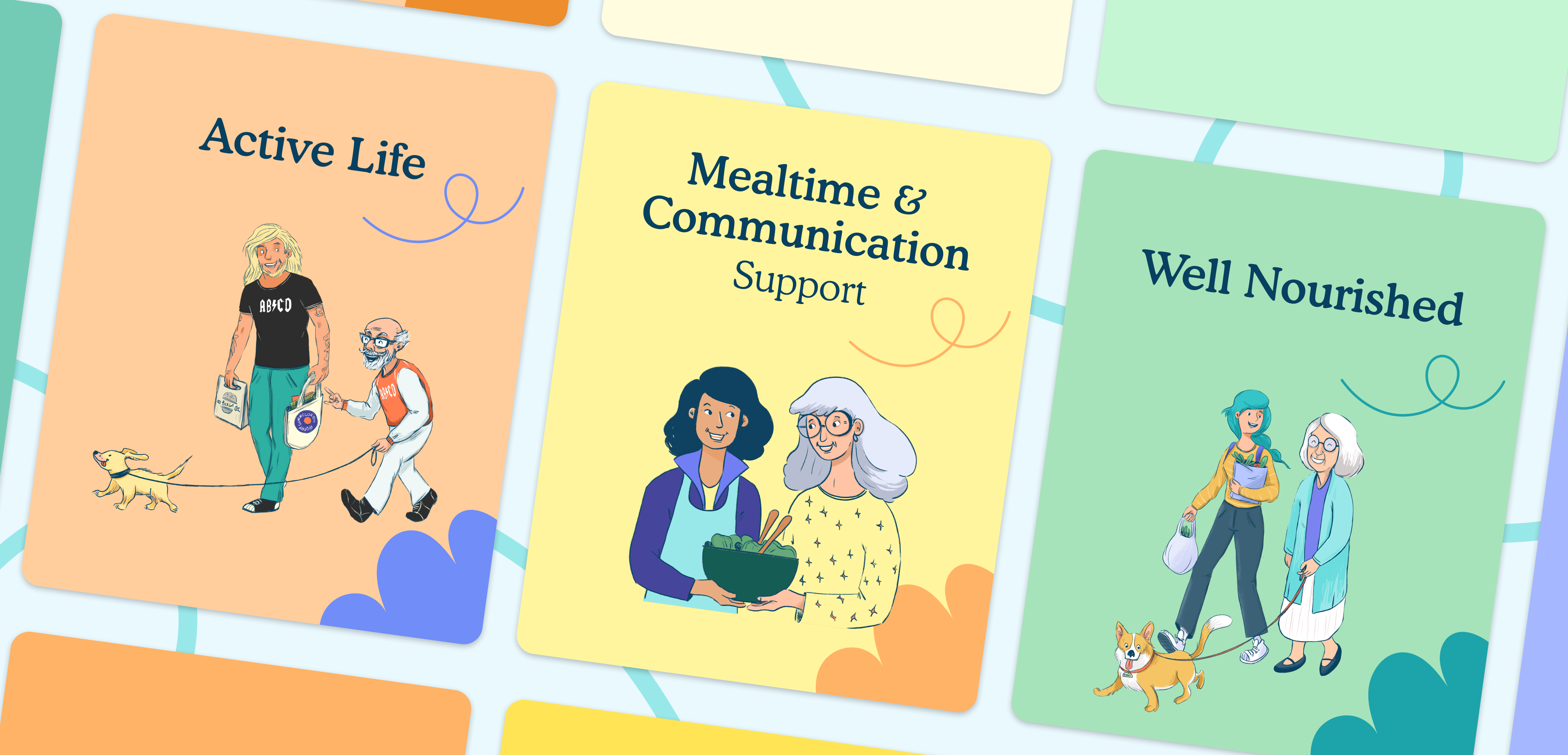
Our evidence-based programs (Active Life, Well Nourished, Mealtime Support) bring supports together in a structured way that delivers long-term benefits and helps you stay at home longer. These programs are designed around what research tells us makes the biggest difference to quality of life.
Learn more about Support at Home pricing and contributions
Our team at Five Good Friends are available to answer your questions and can help tailor a care plan to your unique needs. Contact us today.
FAQs:


.png)